
Views: 0 Author: Site Editor Publish Time: 2026-02-28 Origin: Site
The global aluminum industry is standing at a turning point. Production capacities in China are nearing their peak. Domestic consumption growth is slowing. International trade patterns are shifting. And sustainability? It's no longer optional - it's essential.
So where does China's aluminum industry go next?
The answer is becoming clearer by the day: Southeast Asia.
Like a river seeking new channels, Chinese aluminum enterprises are flowing outward - not in isolation, but in cooperation. And Southeast Asia, especially countries like Malaysia and Indonesia, is emerging as the most promising destination.
This isn't just expansion. It's transformation.
Let's be honest - businesses don't move without reason. So why Southeast Asia?
Because it makes strategic sense.
Southeast Asia sits at the crossroads of global trade. With access to major shipping routes and strong integration into international markets, it offers a natural gateway between East and West.
Countries in the region are members of ASEAN and participate actively in global trade agreements. For Chinese aluminum companies seeking global footprints, Southeast Asia isn't just nearby - it's globally connected.
Think of it as building a new launchpad, closer to international markets.
The vision shared at the forum goes beyond profit.It's about building a community of shared industrial destiny.
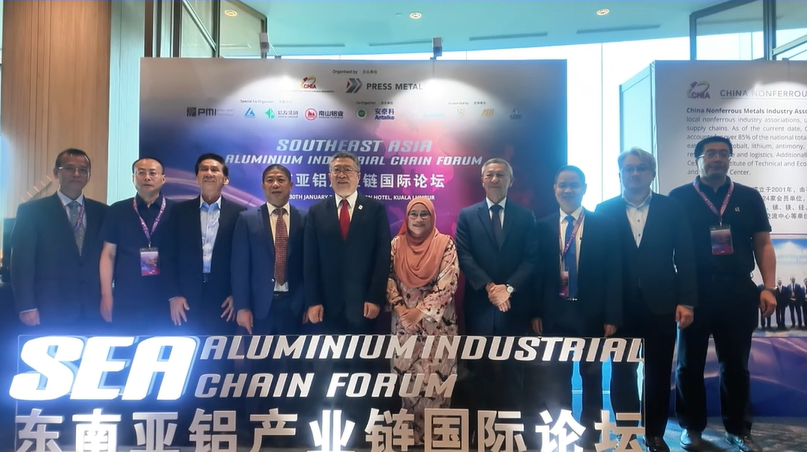
Industry leaders proposed four key directions:
Strengthen dialogue and strategic collaboration
Focus on technological innovation and green development
Deepen supply chain coordination
Expand cooperation in third-party markets
In simple terms? Talk more. Innovate together. Integrate operations. Go global - together.
This approach transforms ''going abroa'' into ''growing together.''
Each Southeast Asian country brings something unique to the table.
Malaysia has built a strong aluminum processing ecosystem over decades. Integrated production capabilities, stable trade policies, and export-oriented manufacturing make it a regional anchor.
Companies operating here benefit from mature logistics networks and international trade access.
Indonesia's rich bauxite reserves make it strategically vital for upstream aluminum production.
As Indonesia promotes local smelting and value-added processing, Chinese investment can provide technology, expertise, and capital - while securing long-term raw material supply.
That's mutual benefit in action.
These markets may not dominate headlines yet, but their industrial growth is accelerating.
Urbanization, infrastructure development, and foreign direct investment are driving aluminum demand in construction, automotive, and consumer goods.
For Chinese aluminum processors, these markets represent tomorrow's growth engines.
Aluminum isn't just metal. It's possibility.
From electric vehicles to solar mounting systems, aluminum plays a central role in modern industry.
Lightweight,Corrosion-resistant,and Recyclable.
As Southeast Asia upgrades its infrastructure and energy systems, aluminum becomes a core material in the region's transformation.
Sustainability is no longer a marketing slogan.
Countries across Southeast Asia are prioritizing renewable energy and carbon reduction. Green aluminum will become increasingly important.
Chinese enterprises bring advanced technology and experience in energy efficiency. Sharing that expertise helps build a cleaner regional aluminum ecosystem.
Win-win isn't just economic. It's environmental.
Each country has unique regulatory frameworks, environmental standards, and investment requirements.
Success requires:Compliance Awareness,Cultural Understanding,and Long-term Commitment.
Quick profits rarely lead to sustainable growth.
Smart companies plan for decades - not quarters.
Southeast Asia is a key region under the Belt and Road Initiative.
Infrastructure connectivity, trade integration, and industrial cooperation are central pillars.
In this context, aluminum isn't just an industrial product, it's a strategic material supporting regional modernization.
As China shares its industrial experience, Southeast Asia contributes resources, market potential, and strategic positioning.
It's not a one-way transfer.It's synergy.
Looking ahead, the China–Southeast Asia aluminum partnership will likely deepen in several ways:
More integrated supply chains
Greater green technology cooperation
Expansion into global third-party markets
Enhanced digitalization and smart manufacturing
Imagine a regional aluminum ecosystem where raw materials, processing, innovation, and markets are seamlessly connected.
That's the long-term vision.
The global aluminum industry is reshaping itself.
China's domestic growth is stabilizing. Southeast Asia' demand is rising. Trade routes are evolving. Sustainability is redefining competitiveness.
This new journey isn't just about factories or trade flows.It's about building trust. Sharing technology. Aligning strategies. And creating a truly open, inclusive, and win-win aluminum ecosystem.
The road ahead may have challenges. But the direction is clear.
Southeast Asia and China are linking hands - forging a new chapter in global aluminum development.
And this? It's only the beginning.


