
Views: 0 Author: Site Editor Publish Time: 2026-03-13 Origin: Site
Pre-painted aluminum coil, also known as color coated aluminum coil, is widely used in construction, roofing, cladding, home appliances, and transportation industries. Thanks to its excellent corrosion resistance, lightweight properties, and aesthetic finish, it has become a preferred material worldwide.
Understanding the aluminum coil coating process is essential to ensure product quality, durability, and long-term performance.
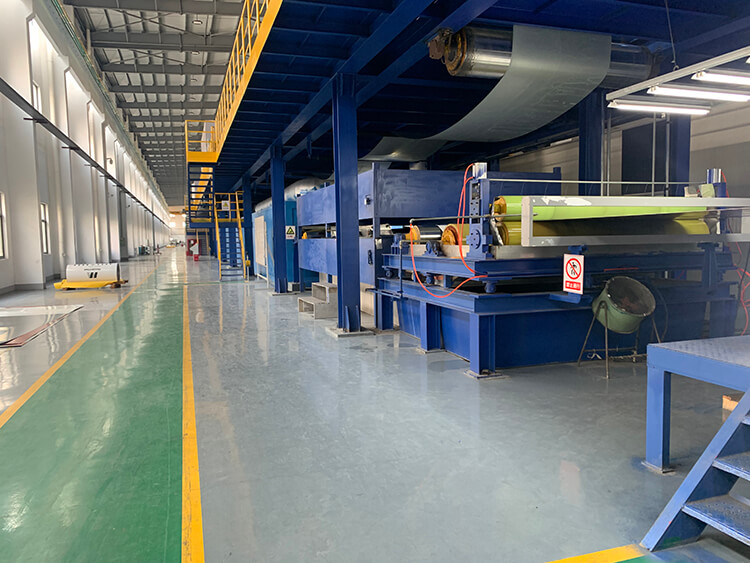
The production starts with high-quality aluminum alloys such as A3003, A3004, and A3105, which offer excellent corrosion resistance,good formability,and strong coating adhesion.
The aluminum surface must be clean and free from oil, oxidation, and defects before entering the coil coating line (CCL).
The aluminum pretreatment process is the most critical stage, directly affecting coating adhesion and corrosion resistance.
Removes oil, grease, and contaminants from the aluminum surface.
Ensures all chemical residues are removed before the next step.
Removes oxide layers,creates a uniform rough surface,and improves coating bonding.
Prevents acid contamination in subsequent processes.
Hot air drying removes moisture completely.
Forms a protective layer that:
Enhances corrosion resistance
Improves coating adhesion
Supports eco-friendly chromate-free systems
Prepares the aluminum strip for coating application.
The coating is applied through a continuous coil coating line (CCL), ensuring efficiency and uniformity.
Improves adhesion between aluminum and top coating
Provides additional corrosion protection
The coil is baked at 200–260°C to ensure proper resin cross-linking.
This layer defines the final appearance and performance.
Common coating types:
PE (Polyester): Cost-effective, suitable for indoor use
SMP (Silicone Modified Polyester): Better durability
PVDF Coating: Excellent UV resistance and long-term outdoor performance
Ensures a durable, weather-resistant coating film.
Applied to the reverse side to:
Improve corrosion resistance
Enhance processing performance
Guarantees all coating layers are fully hardened.
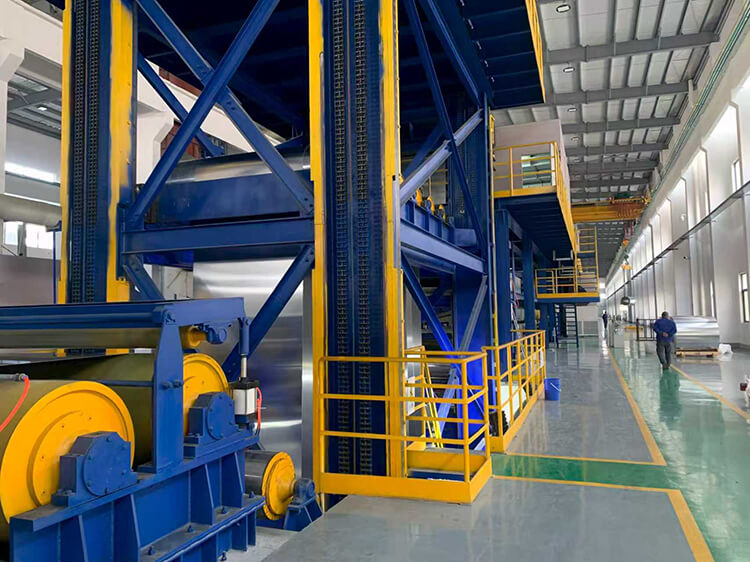
Controlled cooling stabilizes coating properties and prevents deformation.
Optional PE film protects the surface from scratches during transportation and installation.
Strict inspection ensures high-quality output in color coated aluminum production.
Key Tests Include:
Coating thickness measurement
Color consistency
Gloss level testing
Adhesion (cross-cut test)
Impact resistance
MEK solvent resistance
After inspection, the aluminum coil is processed into final products:
Slitting into required widths
Cutting into sheets
Products are then packed using moisture-proof, export-standard materials to ensure safe delivery.
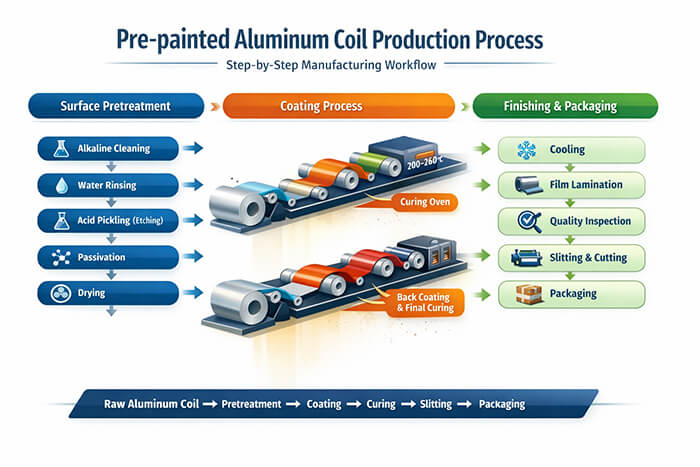
The pre-painted aluminum coil production process is a highly controlled and continuous system. Among all stages, pretreatment and curing are the most critical factors influencing final product performance.
By optimizing each step in the aluminum coil coating process, manufacturers can deliver superior corrosion resistance,long-lasting color stability,and excellent mechanical performance.
As a result, color coated aluminum coils remain a top choice for modern architectural and industrial applications.


